Showing posts with label Israel. Show all posts

December 16, 2009

Jerusalem, Interrupted


Israeli police at the gates of Al-Aqsa mosque

In a speech before the U.N. Committee on the Exercise of the Inalienable Rights of the Palestinian People, Dr. Walid Khalidi offers a Muslim perspective on the history, present and future of Jerusalem. Any one interested in understanding why Palestinians, Arabs and Muslims care so much about Jerusalem must watch the following clips of Dr. Khalidi's speech:

Part1
http://www.youtube.com/watch?v=3x8BM0ry1nM

Part 2
http://www.youtube.com/watch?v=YD7SvFARhGI

Part 3
http://www.youtube.com/watch?v=4SkUyFsnoX4

Part 4
http://www.youtube.com/watch?v=kt4bTXu1nFE

Part 5
http://www.youtube.com/watch?v=Y-dTvd0DYC0

November 23, 2009

Too Little, Too Late?!


The resumption of a beautiful friendship? (AP photo)

Ever since Turkish prime minister Recep Tayyib Erdogan walked out of the Davos Summit meeting in protest of Israel's war on Gaza, Israeli-Turkish relations have undergone a steady downward spiral. Erdogan was, in fact, furious at Israel's unilateral campaign that undermined progressing Israeli-Syrian peace talks under Ankara's mediation. Tel Aviv did not take kindly to Erdogan's action, and asked Ankara to more or less mind its own business. Since then Turkey withdrew from scheduled NATO military maneuvers in the Mediterranean citing Israel's participation as the reason, and wishes to cancel orders for Israeli-made Unmanned Aerial Vehicles. Erdogan, furthermore, stated his preference for dealing with Omar Al-Bashir, Sudan's president, over Benjamin Netenyahu. This comes at a time, when Turkey is pursuing a policy of mending relations with all of its neighbors, including Armenia, Syria, Iraq and Iran.

When Netanyahu said Turkey would no longer be a mediator of Israeli-Syrian peace negotiations, observers assumed he had just hammered the last nail in the coffin of Turkish-Israeli relations. This judgement might turn out to be premature, however. First, the alliance between the two non-Arab Middle Eastern states is well-established; it is likely to supersede the reign of Erdogan's AKP party. The Turkish military, known for its remarkable autonomy, has had frequent contacts with the Israel Defense Forces (IDF). Private companies on both sides have made substantial investments in their counterpart's economy. Second, a recently-launched charm offensive by Israel's Industry, Trade and Labor minister, Benjamin Ben-Eliezer may cool the tempers on both sides. On his trip to Ankara, Ben-Eliezer was accompanied by a number of Israeli businessmen seeking to buttress the two countries' trade. Ben-Eliezer went so far as to contradict his prime minister and emphasize Turkey's importance in mediating the conflict between Tel Aviv and Damascus.

Though Turkey's deputy prime minister stressed the need to improve bilateral ties, obstacles to a resumption of the status quo ante abound. Speaking to Israeli newspaper Yadi'ut Yahranut, Israeli foreign minister Avigdor Lieberman described Ben-Eliezer's visit as "important, but not coordinated with the foreign ministry." Additionally, Turkish public opinion has been turning sharply against Israel following the war on Gaza which left 1400 Palestinians dead, mostly civilians.

It remains to be seen whether the Israeli minister's visit constitutes a thaw in otherwise chilled relations or would prove to be too little too late. I am inclined to argue Turkish-Israeli relations are unlikely to return to their pre-Gaza status.

November 12, 2009

Lebanon United...?!


Deal or no deal?! Berri, Al-Hariri and Nasrallah.


After several months of stalled talks, Sa'd al-Hariri, the prime minister-designate of Lebanon, was finally able to form a unity government. Al-Hariri heads the "14 Azar Movement," a pro-Western parliamentary coalition that won the majority in this summer's elections. Although 14 Azar's victory exceeded most expectations, cracks did show within the coalition. First, Waleed Jumblat's Druze party defected to the Hizbullah-led opposition. Second, Amin Al-Jemail's "Lebanese Brigades" publicly denounced Hariri's decision to appoint only one minister from the Brigades in the ineffectual Social Affairs ministry. The Lebanese Brigades also called for a review of the structure of the coalition. These protests emanate from a growing sense of irrelevance among Maronite Christians and Muslim Druze, two minorities whose demographics and political clout have been diminishing vis-a-vis the Sunnis and the Shi'a.

The new government is more or less the fruit of a deal between Hizbullah and Hariri's Future party. The deal was arguably made on their behalf during King Abdullah's visit to Damascus in October. This episode reveals three things about Lebanon. First, external patrons still call the shots. Iran, Syria and Saudi Arabia are all heavily invested in domestic Lebanese politics. Second, the power of arms (Hizbullah via Iran and Syria) and the power of money (14 Azar via Saudi Arabia and some Gulf countries) dictate the relative balance of power among the sectarian political actors. In the annual conference of the Middle East Institute in Washington, Sami Al-Faraj, the head of the Kuwait Center for Strategic Studies openly bragged about the financial influence of the Gulf Sheikhdoms in determining the outcome of the Lebanese elections. Finally, the Shi'a and Sunnis growing populations have indeed eclipsed those of other sectarian groups, most notably the Druze and the Maronites.

But there is hope yet for a stable Lebanon. The new government not only enjoys the support of Saudi Arabia and Syria, it also enjoys the support of Hizbullah. Lebanese president Michell Souleiman threw his lot behind it too. This could indeed bode well for the stability of Lebanese politics for the foreseeable future. To be sure, national unity governments often avoid tackling controversial and divisive issues whose mere discussion may well bring down the coalition government. This is why such issues as reforming electoral laws and Hizbullah's arms are not likely to be addressed by this government.

More trouble can come yet from the southern borders. Israel claims to have intercepted an Iranian arms shipment bound for Latika, Syria. The missiles are alleged to have been sent for Hizbullah. A number of senior Israel Defense Forces figures have also warned Hizbullah of massive retaliation, should the Lebanese militia avenge the assassination of its military mastermind, Emad Moughneih. Hassan Nassrallah, the Secretary General of Hizbullah, speaking on "Martyr's Day" issued a stark warning for Israel not to launch a war on Lebanon, or risk the "crushing of its army." He neither affirmed nor denied the Israeli claim of his group's possession of 325 kilometer-range missiles, though he promised any land invasion to be nothing short of a quagmire. Hizbullah's political bureau chief Mohammed Qomati also warned that "all cities, military bases, factories, and settlements in Israel are within the organization's firing range." Qomati continued, "The enemy knows that any offensive initiated under the current conditions will ensure his total defeat, will change the balance of power in our favor, and will bring about the end of its entity."

Hizbullah's secretary general had select words for the Obama administration as well. After accusing Washington of deliberately backpedaling on the settlements stance, he admonished his followers that the Obama administration's "infinite" commitment to Israel's interests security is unprecedented. Nasrallah painted a pro-Israeli Obama administration that does not care about the needs of the Arab world. The Cairo speech was a scam, he implied.

As Hariri struggles to stabilize his country domestically, Lebanon's foremost challenge appears to be avoiding another devastating war with Israel. Neither Nasrallah nor Ashkinazi are helping.

August 15, 2009

Israel, Deterred?


Cheering Supporters of Hizbullah

"We do not seek a war, and we are not afraid, but it may well be that Israel wants a war (with Lebanon) of which it is frightened." This sums up the message of Hizbullah leader, Hassan Nasrallah, in his speech on August 14th marking the third anniversary of the exit of Israeli troops from Southern Lebanon. Nasrallah gave a typical crowd-rousing speech; but his charisma to the Arab public is not a surprise. His counter-threats are. For a few weeks, Israeli officials, including Benjamin Netanyahu and Ehud Barak, issued various threats against Hizbullah and Lebanon. They warned primeminister-elect Sa'd El-Hariri of including the Shi'a party in a national unity government, or else all of Lebanon's infrastructure will be fair game in a prospective war. Tel Aviv's hawkish rhetoric seemed to emanate, in part, from growing concern over Hizbullah's expanding armaments.

Nasrallah analyzed the situation differently, however. He claimed Israel wanted primarily to hamper the formation of the national unity government in Beirut by renewing internal controversy regarding the role of Hizbullah in Lebanon. Israel, according to Nasrallah, also wished to modify the mandate of the UNIFIL forces, so they can actively intercept the movement and operations of Hizbullah personnel and arms. On both accounts, Tel Aviv was disappointed. First, the controversy over Hizbullah's strategic posture in Lebanon does not appear to be an overriding concern for the March 14th bloc any more. They may have come to accept it as a fait accompli. Nasrallah shrewdly capitalized on that by reinforcing the concept of a new Lebanese national security that comprises both a strong national army, and the irregular guerrillas of Hizbullah. Even more significantly, representatives of virtually all Lebanese parties (ruling and opposition)and the Presidency attended Hizbullah's "Divine Victory" ceremony. It was especially telling to see Taymour Junblat, son of Druze Leader Walid Junblat (recently defected from March 14th) among the seated VIPs.

Perhaps last night's most important statements were the warnings that Tel Aviv will be bombed, should Israel target Beirut or its Southern Suburbs (Shi'a neighborhood considered Hizbullah's stronghold), and that the "Resistance's" missile can now reach any point on Israeli proper. Nasrallah went further to promise the Israeli Defense Forces a crushing defeat and a lot of "surprises", should they venture once more into Lebanon's south. All of this fiery rhetoric comes at the backdrop of intense speculation of Hizubllah's possession of high-precision missiles capable of carrying heavy war heads (600 kilograms of explosives), anti-air craft batteries and anti-ship guided missiles.

It may remain a mystery whether the Lebanese militia does in fact hold such advanced weaponry (their arms' sophistication exceeded most analysts' expectations in 2006). One thing is clear, however, Israel will think twice before marching into Lebanon. Israel's stated aim of war in 2006 to root out the "Islamic Resistance" from Southern Lebanon looks more distant than ever in 2009. More ominously for Tel Aviv, Israel's entire population is now at risk, as well as all of its industries. Hizbullah's strategic posture is unprecedented insofar that this is the first time, since its inception that Israel's home turf may suffer significant damages and losses. It used to be the case that Arab-Israeli wars were fought on Arab lands, and civilian casualties most confined to those of Arabs. This may no longer be the case.

August 5, 2009

Between a Rock and a Hard Place!


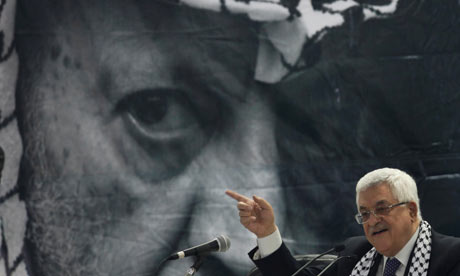
Abbass Overshadowed by Arafat!

On its second annual conference this week in Bethlehem, Fatah has no good options. It is squeezed between an occupation that demands that Palestinian territories be pacified and neutralized, and a populace skeptical of the Palestinian Authority's relationship with Washington and Tel Aviv. This “paradox of representation,” as Political Scientist Tamim Al-Barghouti coins it, came to the fore with Abbass’ takeover of power in Ramallah.

Arafat, the main founders of Fatah/ the Palestine Liberation Organization (PLO), spent much of his time in Ramallah balancing between the two opposites, however unsuccessfully. He signed several peace agreements, intermittently cracked down on Hamas and Islamic Jihad militants, and offered major concessions regarding Palestinian "rights" to historical Palestine. On the other hand, he aided and funded Fatah's militia "Al Aqsa Martyrs Brigades," turned down the Camp David Agreement (for arguably good reasons) and turned a blind eye to the eruption of Al Aqsa Intifada. The promise of establishing an independent Palestinian state was the foundation of his regime’s popularity, and for that he was, in effect, parachuted back to the Palestinian Territories from his Tunisian exile. His reign ended in besiegement, destruction of West Bank infrastructure and an ongoing occupation.

Since Arafat's death, Fatah has opted for better relations with America and Israel, even when a peace agreement could not be any further. Fatah consistently refused to join hands with the Gaza-based Hamas government, arrested Hamas militants in the West Bank, all but ended Al Aqsa Martyrs Brigades’ operations and launched numerous unsuccessful talks with Israeli officials. Seeing no material improvement in their living conditions, let alone a cessation of the Israeli occupation, Palestinians predictably turned towards the "resistance" paradigm of Hamas.

In its annual conference, Fatah appears perplexed, irrelevant and weak. First, Hamas banned Fatah members from travelling to the West Bank to attend the conference (until Ramallah has released Hamas detainees). Second, Farouq Al-Qaddumy, a senior Fatah official in Tunis, launched an unexpected attack on President Abbass prior to the conference, in which he accused him (and Fatah tycoon, Mohammed Dahlan) of collaborating with the Israelis to poison Yasser Arafat. Qaddumi blasted the Palestinian President, furthermore, for being corrupt, and having his forces trained by U.S. General Keith Dayton. Qaddumi's words mirror the substantial disenfranchisement felt by Palestinian refugees, particularly those who are members of Fatah. Third, many Fatah members are dismayed with the appointment of the non-partisan Salam Fayyad, as head of the West Bank Palestinian government. This appointment denied them many of the benefits associated with running a government that relies financially on foreign aid. The discontent goes beyond Fayyad, to be sure. There is an old guard-new guard rivalry within Fatah, and, more significantly, there is disenchantment with Abbass' seemingly futile all-dialogue all-the-time approach towards Israel.

On its part, Hamas not only blocked Gazan Fathawis from travelling, but launched severe criticisms of its rival in the West Bank. Most of the criticism, nonetheless, was directed at Abbass who was accused of abandoning the "Palestinian national project... and national goals." Fawzi Barhoum, senior Hamas official, claimed Fatah assisted Israel in its recent war on Gaza. Abbass had, in fact, attacked Hamas on the conference's first day, accusing it of "darkness and terrorism" as well as plotting to assassinate him. Fatah’s predicament is Palestinians are more likely to find more truth in Hamas’ accusations of Abbass than the other way around.

The overarching question the Palestinian President (whose constitutional term in office ended last January) had to answer in the conference is: what is the future of the national liberation movement of Palestine? On that, his answer, for many Palestinians, left a lot to be desired. Abbass emphasized principally diplomacy, and, to a lesser extent, the exclusive concept of "legitimate" resistance. The foregoing concept is unlikely to find much popular backing, as they have come to see the West Bank government forces, as instruments to crack down on the classical resistance model of “armed struggle.” The President’s outspoken attack on Hamas, and implicitly other militants, reveals Abbass' desire to mend his own fences before solidifying a united national front. To be sure, a Fatah divided house cannot make peace with Hamas. Nevertheless, Abbass sounded more like a partisan figure than a national leader. This does not bode well either for the future of Fatah or that of the seemingly endless Cairo reconciliation talks with Hamas.

During the Gaza war, Tel Aviv and Washington quickly realized the full extent of Fatah's irrelevance. Hamas was calling the shots. Fatah could not be relied on to topple Hamas, or even assume power, if Israel did the job. If Israel wants a solution to the missile crisis in Gaza, it must negotiate with the Islamic Resistance Movement, Hamas. After the conference ends, Fatah would be as irrelevant as ever. It will continue to suffer the debilitating legitimacy crisis it has been experiencing, since Arafat’s death. The Palestinian electorate may not be so kind to Abbass’ party in the next parliamentary elections next year. If Fatah is to make gains, it seems it would be the fruit of Hamas’ own making.

Here is the full text of Abbass' conference speech.

July 29, 2009

A New Government... For War?


It has been more than a month, since the March 14th coalition won the Lebanese parliamentary elections. The delay in the agreement on the government’s formation was expected, given Lebanon’s inherently polarized politico-sectarian system. Three years ago Hizbullah and Amal walked out on the government triggering a constitutional and legitimacy crisis for Beirut. The crisis, then and now, lies in the opposition’s understanding of the nature of Lebanese politics. Whilst the parliamentary majority felt it was natural that it would rule as any given majority would, the Hizbullah-led opposition (comprising various Christian, Druz and Sunni parties) bid to differ. Their line of reasoning holds that Lebanon’s splintered sects must be ruled by consensus rather than majority. The voters appear not to have responded enthusiastically to the latter proposition.

Three years ago, the opposition's fervent demands for what they termed the “guaranteeing third” of government ministries (enjoying veto power effectively) threw the country into an acute political crisis that lasted for two years. After the recent elections, similar demands were made of prime minister-elect Sa’d Al-Hariri. This time around, however, the opposition’s demands fell flat, as it took less than two months for Hariri to forge an agreement on the new government. Hizbullah has cleared the way for the new government to form, signaling its content with its prospective configuration.

The National reports that “according to political sources in Beirut and reports in the local media, the parties have agreed to a format that would give the majority 15 seats, the opposition a 10-seat portion and allow President Michel Suleiman, who is widely seen as an independent, five seats to prevent a plurality by the majority.” This arrangement would, in effect, award President Suleiman, known for his impartiality, veto power over government decisions. Speaker of the parliament, and head of Hizbullah-allied Amal movement, Nabih Berry affirmed the details would be hammered out in two days, and that “principally the government has been formed.”

Al-Akhbar and An-Nahar newspapers published lists of probable candidates for the ministerial positions in the new government.

The rapid political progress in Beirut is explained less by the appeal of the 15-10-5 formula to the opposition, and more by the menacing developments along the southern borders. The Likud government has tried to diplomatically capitalize on an explosion in a southern Lebanese village, which seemed to have been caused by stocked Hizbulla ammunition in a residential house. Tel Aviv asked for renegotiating the 1701 Security Council resolution governing the mandate of the United Nations Interim Forces In Lebanon (UNIFIL). After threatening that “Israel will not stand idly by,” Al Quds Al Arabi reports that four Mirkava tanks moved alarmingly close to the disputed borders, and that several Israeli jets violated Lebanese airspace flying over the Biqa’ Valley and Hassbia.

On his part, Nasrallah looked unshaken by the threats, as he issued his own. In a typical televised speech, Nasrallah warned that an Israeli attack on Hizbullah stronghold of Beirut’s Southern District (devastated during the last war), would induce retaliation against Israel’s biggest city of Tel Aviv. If Israel were to bomb Beirut, Hizbullah will attack surprising targets in Israel (possibly Israel’s nuclear reactors). Concerns over the eruption of a new war between Israel and Hizbullah are so serious that the meeting between Israeli defense minister, Ehud Barak, and US secretary of defense, Robert Gates, was clouded by discussions over the potential confrontation.

Hizbullah’s willingness to permit the Hariri government to form is an attempt to ensure a stable domestic front, should external development take an ugly turn.

July 13, 2009

Erdogan's Dilemma


(Prime Minister Erdogan pointing a fingure at the Israeli President.)
Turkish Prime Minister Tayyip Erdogan has gained much popularity both in Turkey and in the Muslim world when he publicly scolded the Israeli president Shimon Peres, blasting Israeli military operation in Gaza as "a crime against humanity." Erdogan vehemently demanded more time from the moderator to respond to Peres' statements and, when given time, accused the president of "knowing very well how to kill". Click here for the video.
The undiplomatic burst of rage had serious implications for Turkish-Israeli relations. Major General Avi Mizrahi of the Israeli Defense Forces said the Turkish Prime Minister should have "looked in the mirror," before criticizing Israel (in reference to the Turkish presence in Cyprus). The IDF tried to contain the controversy claiming the general's comments did not represent "the official position of the IDF."

The Erdogan-Peres incident which had created a lot of buzz during the legislative and municipal elections in both Turkey and Israel proved less damaging to mutual relations than once feared. In fact, what started as a Turkish-Israeli spat turned into a self-review of Turkey's regional policies, particularly towards Cyprus.
The recent trip of Mahmoud Abbas to the Republic of Cyprus (Greek-Cypriot southern part of the island that enjoys EU membership since 2004) was not well received by Turkish media and public. It should be noted that a sizable Turkish population lives in northern Cyprus, and has enjoyed Ankara's complete support over the decades. The Greek Cypriots rejected uniting the island with their Turkish neighbors. Now, neither Turkey nor Turkish Cyprus have EU membership. What is worse, both Greece and the Greek Cypriots must approve Ankara's EU membership.
Erdogan may have expected gratitude from the Palestinian president, but that he did not receive. Reports from the Greek Cypriot media that the president Demetris Christofias thanked Abbas for bringing up Greek Cypriots issues at the Organization of the Islamic Conference and for Palestine's support for Greek Cypriot's "struggle." The visit was perceived by Turkey as an ungrateful behavior on the Palestinians' side.

Cyprus is a hot spot of Turkey. Turkey claims it had a right to intervene as a guarantor force in order to respond to Greek supported junta in the island. Greek Cypriots, conversely, cite the existence of Turkish troops in the islands, and human rights violations during the 1974 invasion. While the analogy between Turkey- Cyprus and Israel-Palestine is far from being exact, these two areas have suffered from ethnic conflict following the withdrawal of British mandate.
So why does Turkey feel betrayed by Abbas' statements? First of all, Turks would like to think of themselves as a "benevolent power," whose benign intentions and actions are misconstrued by others. Second, Turkey's new foreign policy under the guidance of Ahmet Davutoglu, an advisor to the government and as of May 2009, the new Foreign Minister has aimed at shifting Ankara's strategic posture from relative isolationism into being a more influential actor. For a couple of years now, Turkey has connected with countries from all over the world with official visits and opening of embassies in parts of the globe with which Turkey had not had significant relations. Turkey's desire and accomplishment to be a non-permanent member of the UN Security Council and its self-appointed role as an honest broker of peace between Syria and Israel are part of newfound sense and aspiration of being influential in world politics, and can be best described as "neo-Ottomanism".

The question is whether the Erdogan government has been managing the transition smoothly. The Erdogan Davos rant reveals otherwise. However, the orientation of Turkish government seems to indicate that Davutoglu's policy of "zero problems" (i.e.: maintaing food relations with all of neighbors) is still the prevailing foreign policy tool as was manifest in Ankara's rush to congratulate Ahmedinejad after the Iranian elections. Time will show if Turkey's strategic plans to gain a greater role in the region and in the world will have more pros then cons but until then ups and downs with fellow countries will dominate the daily politics.

So far, signs indicate that relations with Israel are back to normal on the diplomatic level, the angry exchange has caused Turkey lose half of the average number of Israeli tourists. Nabil Marouf, Palestinian ambassador to Turkey denies reports that Abbas backs Greek Cypriots and Turkey has now moved onto another cause to defend: the Uighurs.

July 8, 2009

Not in my Backyard!

"Israel can determine for itself... what's in their interest and what they decide to do relative to Iran and anyone else". Joe Biden's permissive remarks regarding a potential Israeli strike on Iranian nuclear facilities enjoyed a lot of attention in the mainstream media. Biden's remarks were perhaps only eclipsed by the President's swift disavowal of them. Nevertheless, neither President Obama nor Chairman of the Joint Chiefs of Staff, Admiral Mike Mullen, ruled out military force as an option. Iran, on its part, considers an Israeli attack to be an American attack.

There was equally significant news on this very subject coming from the Middle East that was not widely reported in the United States, however. Two American allies, Iraq and Saudi Arabia, distanced themselves from the scheme. These two countries hold the key to an Israeli assault on Iran, as Israel is more likely to fly through their airspace to carry out the operation rather than go through Syrian or Turkish territories. The pair is predictably wary of Tehran's retaliation, which is bound to be profoundly destabilizing to the region.

A July 5th report by the Sunday Times suggested that Riyadh had, in fact, given Tel Aviv the green light to fly its bombers through Saudi airspace. But Saudi officials and analysts vehemently deny the reports, describing the potential strike as a "belligerent activity." The Iraqi government went even further warning that "any penetration of Iraqi airspace by an Israeli national would be considered an attack against Iraq," and a violation of its sovereignty. Hassan al-Sanid, a member of Iraq’s parliamentary committee on security and defense, claimed that under the Status Of ForcesAgreement (S.O.F.A), "Iraqi land, sea, and air shall not be used as a launching or transit point for attacks against other countries."

So, what is happening exactly? I have a five possible explanations. First, the American Vice President is being his usual self, not committing to the President's diplomatic discipline. Second, President Obama is keenly aware of the devastating repercussions across the region of an Israeli attack on Iran. Third, and perhaps most importantly, the so-called anti-Iran Arab-Israeli alliance is not as solid as some of its cheerleaders wish it to be. Not only does it lack any popular foundation, but Arab governments will not be caught collaborating with the Jewish State against the Islamic Republic. Iraq, though likely to be on good terms with Washington for a few years, is acutely sensitive to the needs and concerns of its more powerful neighbor. Saudi Arabia does not wish to experience the wrath of the Ayatollahs, should the attack come via Riyadh. Fourth, a good cop, bad cop scenario may be in place. Washington may well be emphasizing its relative benign attitude towards Iran through stressing Israel's sovereign will and the lack of an American green light. Fifth, and more likely, the regional actors, the US included, do not seem to have a clue what to do next regarding Iran, hence the conflicting statements. All options are bad; that of which they are certain.